York Town Historian James Kences Protests Cutting of Village Tree and Creates Citizen Petition

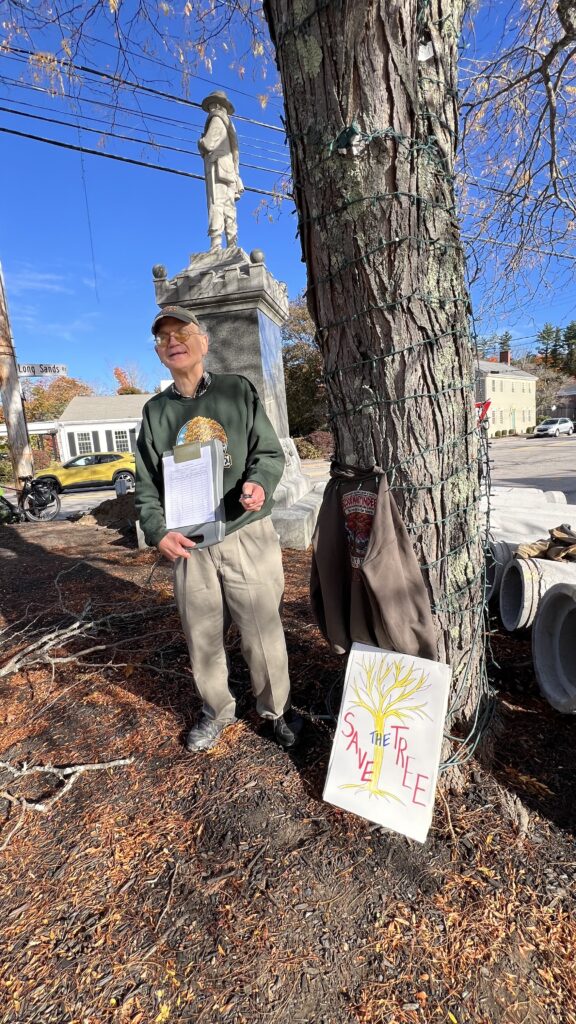
James Kences stands beside a honey locust that is the target of removal by a construction company tasked with creating a new green space in historic York Village. Photo taken October 21, 2026

James Kences has created a citizen’s petition and submitted to the York Select Board. It seems very likely the honey locust will be cut this upcoming week, of November 1.

What do a honey locust and Town historian James Kences have in common? In terms of the Town’s historic timeline they both arrived quite recently. James began studying early York families while living in Massachusetts. He became so enamored by what he read, he got in is car and drove to the Village Burying Ground, and soon after became a resident of York. The honey locust was already an established resident when James arrived. Someone saw to it, to plant this tree in the center of town knowing that it would resist heat, drought, compacted soil and road salt. But there is more to the story. James has been protesting in the company of the honey locust for years. My first recollection is when I was on the Board of trustees at Old York and through the Board room window at 207 York Street, James was seen by the Board protesting the removal of the museum’s treasured archives from York to Kittery. There is no-one who has spent more time at the triangle protesting on behalf of common sense and for us all, as has James Kences. 

I am a tree hugger. When walking through the woods, I like to hug a tree or two. I love trees. They sustain my life. They are also so beautiful that I make paintings of them. How can I not? Yet, trees and I have a complicated history. I know that my colonial ancestors here in York, sold trees. They started with ship masts, firewood, and went to barrel staves, clapboards, lumber and any thing else that they could capitalize on. In fact, York residents cut so many trees that trees became a rarity in York and all of New England was affected by massive deforestation by European settlers. I believe that I somehow inherited a love for processing firewood from these Europeans and at the same time I don’t enjoy cutting trees. This is a dichotomy that I am dealing with. At a very early age, my dad took me into the woods where he taught me how to cut trees with a chain saw, use an axe and how to season firewood. In the woods, he recalled to me how he and his dad would go cutting wood with a team of horses in the winter. And how the horses would pull the wood out with a scoot sled. My dad cultivated some romantic notion of tree harvesting in me that he shared with his brothers, two were professional wood cutters. My aunt Evelyn, told me how my great grandfather, Albert Perkins, would take a team of oxen and a cart from Logging Road, up to the backside of the Mountain, and spend the night, sleeping under the cart. They would spend the next day cutting trees and filling their cart with firewood, driving it to the Cape Neddick River for export. Cutting wood connects me to my family and it also warms my soul, especially when sitting next to the wood stove on cold winter nights. 

Although it may be in my DNA to cut trees, I try to make amends to each tree I cut by saying a prayer after felling—I have read that some Natives leave tobacco at each stump as a token of respect. Then I haul, cut, split and stack the wood. I very much enjoy the latter process and feel that the wood pile is security in the event of a hard winter, no doubt a mentality passed down through generations.

As I was explaining all this to James today, after I signed his petition, it occurred to me, that in his eyes, I could be perceived as a traitor. I confessed to James—someone intent on saving a tree, I am a tree cutter. I may have been minimizing his feelings of companionship for the honey locust. But I trusted my friendship with James and our shared interest in working out puzzling situations. I have been the beneficiary of James friendship for many years and I know he has a big heart. James explained to me his relationship with the honey locust—how it had accompanied him through severe weather, emotional rollercoasters and even the best of days during his numerous protests. The tree has been his companion and is now his champion. After our conversation I became introspective and realized I too had favorite trees. Ones that have accompanied me through most of my life and that I cherish. Many near my house, two still bear the marks of a treehouse. I realized that the trees I am most familiar with are the ones I love most. And like James with his tree, if mine were threatened, I would stand against any aggression toward them. As a friend of James, I find myself allied with him and his effort to save the honey locust. 

I don’t know if all trees are equal. I feel that deep down, yes, all trees are equal. They are all created by the awesome force of nature and life. The idea that we may pick on one to be a companion may diminish all the others. But it isn’t difficult for me to empathize with James, especially as it is so simple not to cut a chosen tree. 
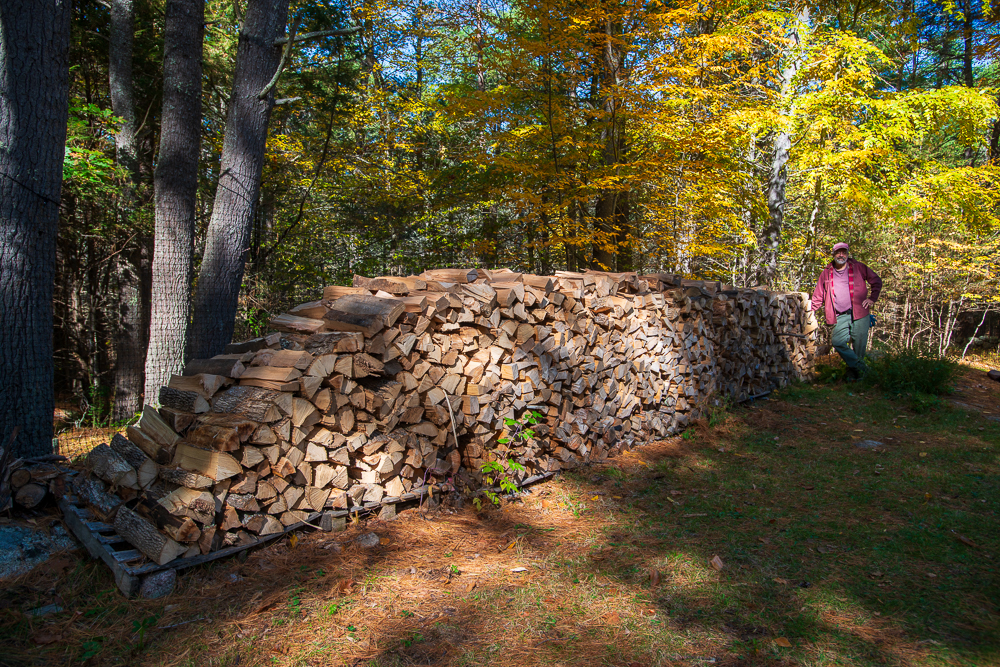
My latest woodpile, fall of 2026, about three chord. All white ash, salvaged from a neighbors culling of trees around her house. The trees were all dead before cutting, splitting and stacking.

Studio Visit With Tony

Yesterday, I had a studio visit with my friend, Tony. We spent a few hours catching up and exchanging ideas about painting. Over a year ago, Tony invited me to his studio for a visit and prior to that Tony attended a “Show and Tell” at Freeman Gallery. Tony and I were both on the Board of a local non-profit which is where I got to know him. When on the Board we quickly realized we were both creative spirits and I have always looked forward to seeing and talking about art with him. Tony is also an art conservator—so he looks at art quite differently than I do. I think in comparison I don’t think about art as commodity.

Tony has become a friend over the years, and I feel quite comfortable and excited to exchange ideas with him. With that said, I am quite introverted with my paintings and other creations. I don’t feel a strong desire to get them out there, into a gallery. Over the years I have become OK feeling this way. I have always painted to explore possibilities and marketing and sales of my painting just doesn’t get me up in the morning, so I come up short with galleries and the like. And for me, this causes a difficult problem, not only does my work not sell, but only one or two people see my paintings. Hence, there is a never ending supply of new paintings and drawings piling up everywhere. This doesn’t make me feel happy, as I feel in a way I am wasting our planets resources. But I haven’t stopped, so far.

These two aspects of painting Tony and I really keyed in on—creativity and selling art. We began by talking about how artists rise to the top and it is often not obviously based on merit. As we drilled down, what is merit to an artist? Is it a two dimensional surface that “works?” What does it mean for a painting to work? I told Tony, in my education I was told a painting had to have a unified surface where every brush stroke was integral to every other brushstroke, and only then would a painting be worthy of being complete. This idea obfuscates the other likely relevant aspects of a painting. For example, the emotional trigger that perhaps inspired the work. In my painting classes at PSA (Portland Museum of Art; currently MECA&D) there was confusion among the faculty of what worked. We had the benefit of many instructors walking through the studios. They would stop and comment on painting and sing praises for work that other instructors dispelled as incomplete or lacking in composition. At first these contradictions seems ironic. Gradually, however, I realized they were the norm.

Back to my conversation with Tony… Who decides what artists are selected over other artists and by what basis. In the high stakes markets of Southby’s and Christie’s, I dare say money dictates. If art is a commodity it needs to be part of a business strategy. And as this cog spins those responsible are the gallerists and business partners. At this point if a painting works or not gets lost in the sea of money. As Tony pointed out to me, some artists do make some excellent paintings but the majority of their work could be “terrible,” non-the-less, consumers are willing to pay premium prices for good or bad work.

When I say good or bad work, I mean to say that some work is obviously stronger than other work and even if someone does a so called weak painting I applaud them for trying. By applying academic principles to art I feel that it can be belittled. Ultimately, beauty is in the eye of the beholder. This is apparent in local galleries as it is in major institutions. People are entitled to like a painting just because they do. And if enough people like an artists work it elevates the artist and interest is found.

Additionally perceptions are allowed to change. We may respond in one way to a painting and see it differently after having a conversation about it. A painting can take on a whole new life as our lives evolve and we have more experiences. It is refreshing that no two people paint the same way. There are so many variations for an individual to express their uniqueness that painting to look like another artist would take dedication and practice. As much as we like to categorize and announce a painting works it is really missing the point.

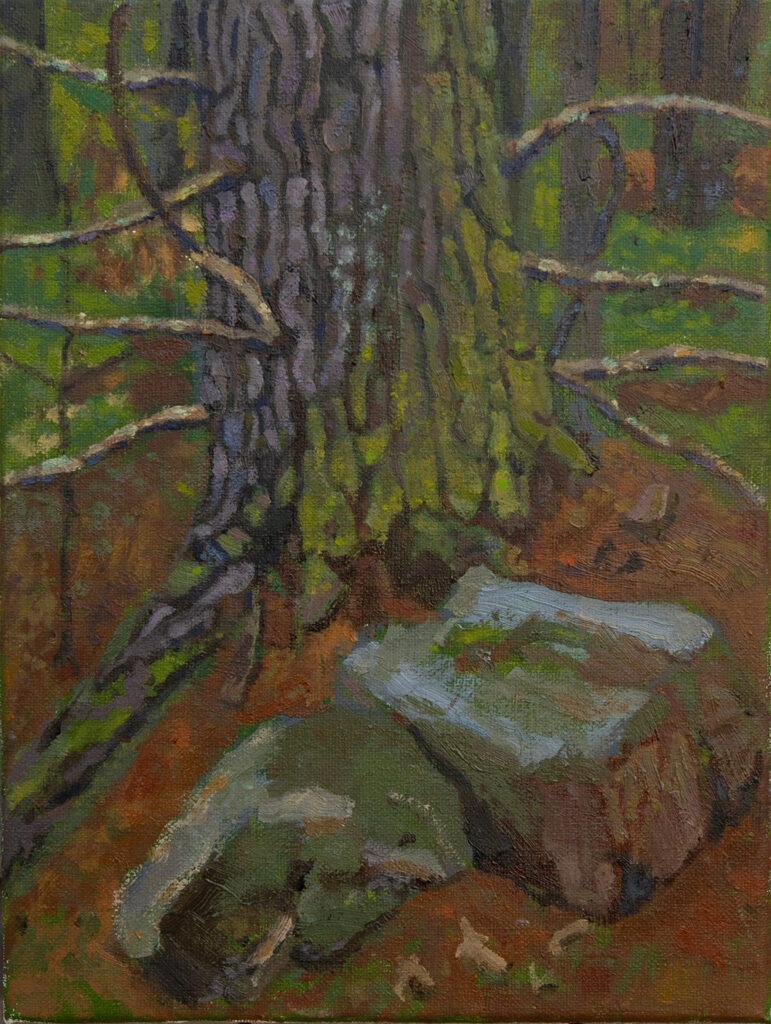
Untitled, Oil on Linen, I brought this painting on my walk with Tony and to the location where it was painted. He made a suggestion about considering to alter the lower sides of the branches to a less warm color. A seeming nuance that had not occurred to me. I thought I was working from observation and that would suffice. But I did make some tweaks to the branches and am pleased.
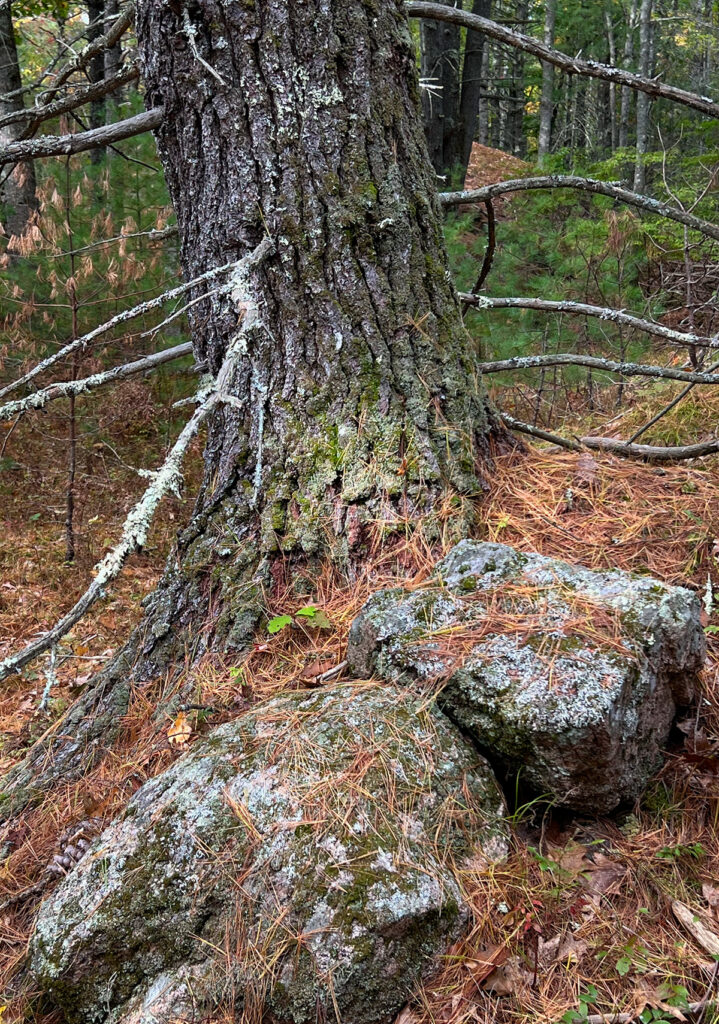
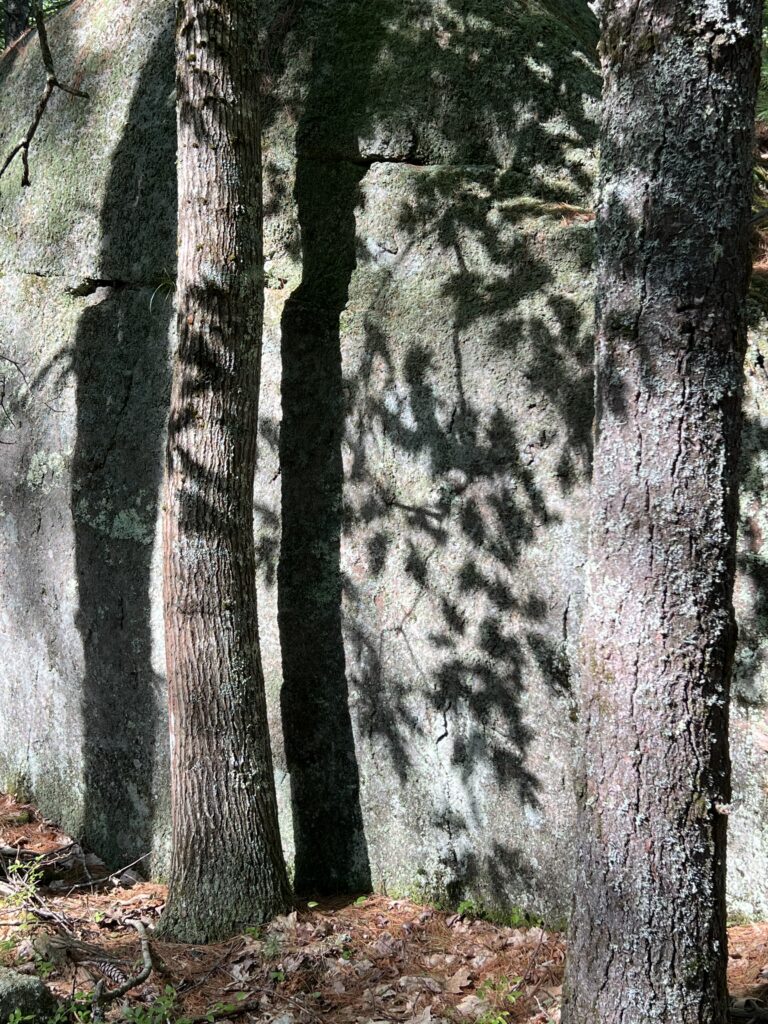
This is the tree featured in the above photo. The light is constantly changing on the surfaces and creates a challenge to paint. At some point, it is necessary to make a departure from observation to the feeling of the painting, as I realize I cannot copy nature, but rather celebrate its illusiveness.

The inspiration for one to paint can be varied but ultimately individual needs dictate and most often the need is met by trying to express an emotion. Can art be created without emotion? I suggest that without emotion it would be a product of skill, perhaps craft. I don’t feel that there is a way to make an objective evaluation on a work of art. Certainly viewers can reach a consensus and there will always be naysayers.

Tony and I talked about the role Johanna van Gogh-Bonger had on the legacy of Vincent Van Gogh. Vincent was mostly underrated by his contemporaries. He sold one or two paintings in his life time. He left behind about 900 paintings and his sister in law, also known as Jo, took it upon herself to market his genius to the masses, something her husband Theo could not do in his gallery. One wonders how Vincent became a household name within a century of his death and is his popularity based on the merits of his painting or also on the idea of his story? There are numerous stories that seem to provide an enhanced fascination to an artist’s legacy.

Chatting with Tony gave me a lot to think about and appreciation for his knowledge of many of the so called great artists. Art brings so much richness to the creator and the viewer that it is impossible for me to make any clear arguments. But recalling the quote by Joseph Campbell, “follow your bliss,” I am inspired to get up from my chair and go into my studio and observe the paint flow from the brush.

Fall in Southern Maine

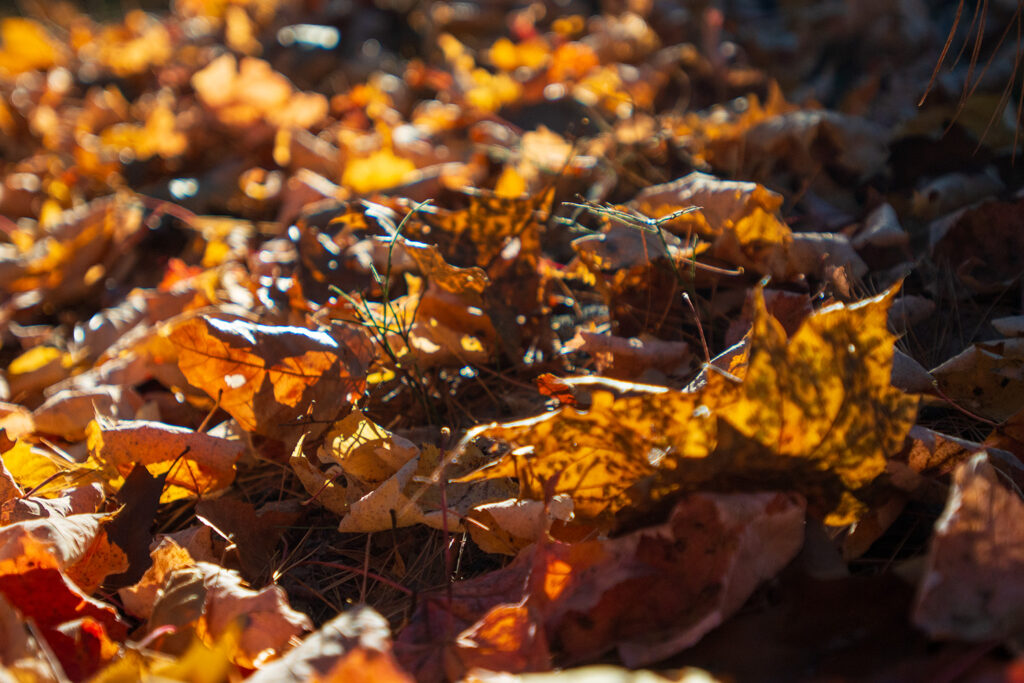
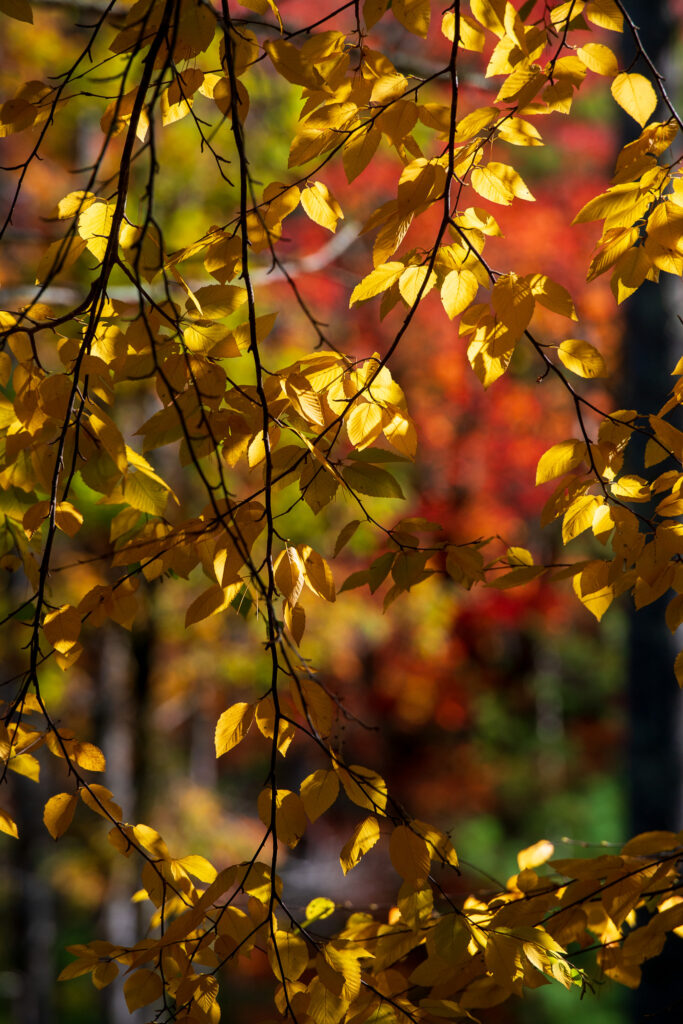
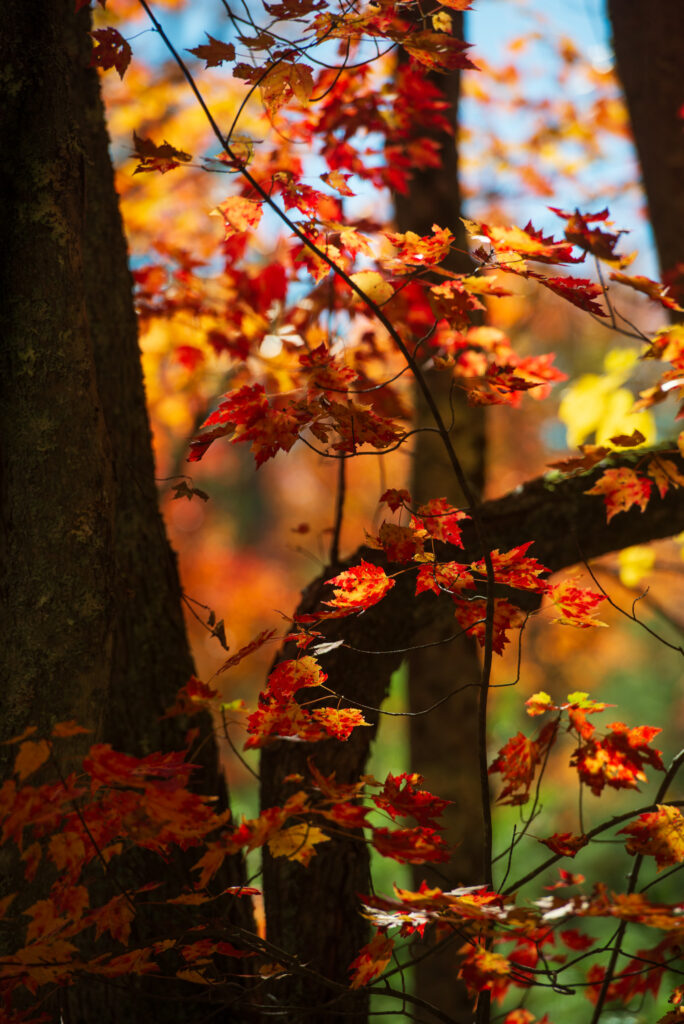
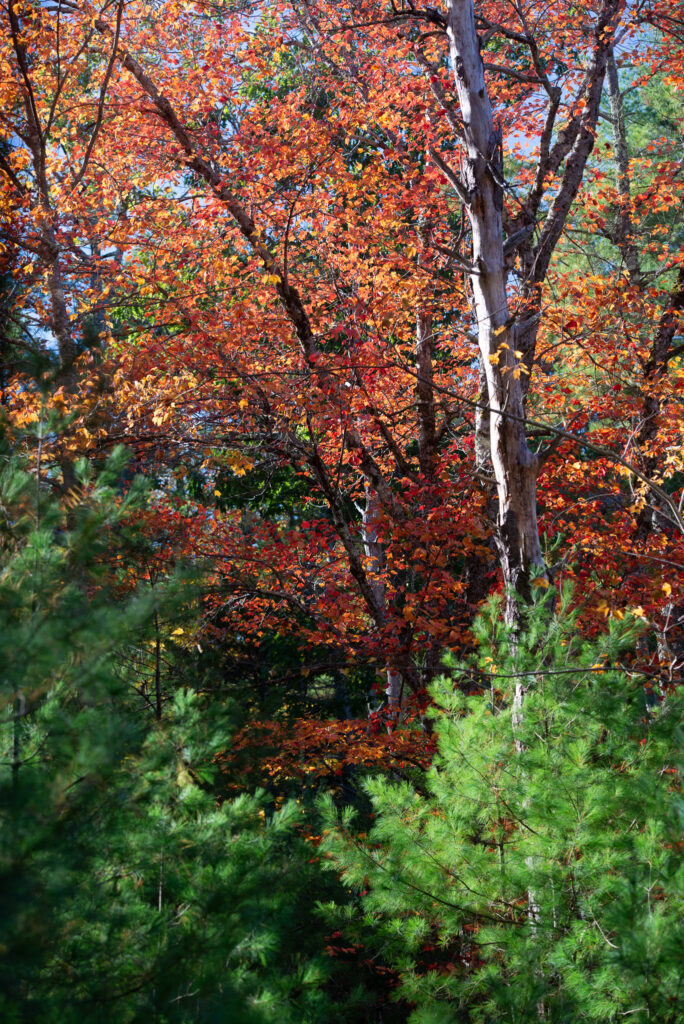
Recent days have been amazing. I have no words to describe the immense display of colors nature has been expressing. My camera can not reach to the heights of wonderment that apparently can only be seen by one’s eyes. My humble paint brush, no matter how charged— cannot convey what is before me, in the woods, with French easel and over zealous ambition.

To share the awesome colors of fall

It is beyond me to just let it lie, unnoticed. So I go out with paint, canvas and brush and try to mix some semblance of what I am seeing, convincing myself that I can do it. As I paint a warm feeling of love for nature overcomes me and I don’t feel that any of this is important, that I will just respond to the love of nature that I feel, and everything will be OK.

To show the amazing colors of fall foliage

Soon the colors will all be on the ground, composting into a nutritious meal for next year’s vegetation. As the days become cooler, there will be only trunks and branches of dark shades, stark against the late fall and winter cold gray sky. So I am working in earnest and won’t give up on the idea of capturing the beauty of fall that is all around me, today.

To convey the beauty of fall

A Trip to My Matriarchal Area — Cape Anne, Massachusetts

Rockport Day Trip (September 26, 2023)

On my 63rd birthday, Sandra and I drove to Rockport, Massachusetts, where my mother grew up and I spent time as a child, in the summer’s, with my grandparents, William and Josephine McNamara. My grandfather was a longshoreman. He off loaded cargo from the fishing boats that arrived fully loaded into Rockport and Gloucester Harbors. He was very muscular and told me it was from offloading wooden barrels, upon his shoulders, from the boats all day. My grandmother was a housewife who also baked goods for a nearby grocery store. I feel amazed to have such vivid memories of being with them as a young child, watching Gunsmoke while sitting on my grandfather’s lap and being escorted downtown by my grandmother, with a destination of Tuck’s drugstore to be let loose in the candy section.

Now, I have so many memories but miss my grandparents love and guidance that made Rockport so special to me in the first place. They lie at rest in the Beach Grove Cemetery at the end of Pleasant Street, two streets from the home they built and raised their family in.

Kevin, Wife Sand

As Sandra and I arrived in Rockport, to my great surprise, suddenly a car passed us with two most familiar faces, my daughter and her boyfriend! I was excluded from planning this and very happy. We went to lunch, we drove them around to the more significant family landmarks and needing to be at work, they soon whisked themselves back north.

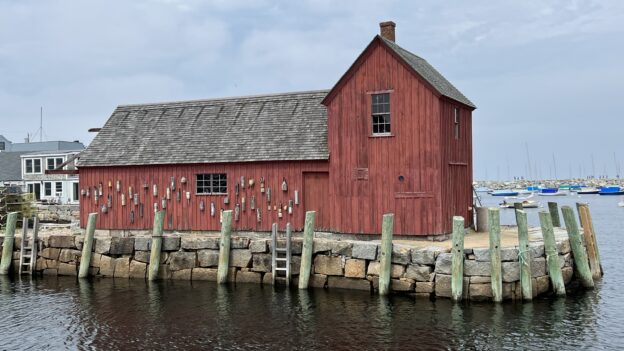
We brought our bikes and a saw, parked at the Rockport High School and pedelled to the cemetery. We pruned some arborvite bushes that were encapsulating William’s, Josephine’s and my uncle Richard’s headstone. From there we pretty much coasted downtown and to the parking lot across from Motif Number One. There was a cool southerly breeze making our visit very enjoyable. We pedaled around Bearskin Neck and past the Benjamin Tarr house, my 7th great grandfather. In Rockport my family roots go back as far as my paternal family goes back in York. Rockport has always felt like a second home to me.

Kevin and Sandra Freeman at Motif Number 1, Rockport, MA
Kevin and Sandra Freeman at Motif Number One, Rockport, MA
Fisherman’s Memorial in Gloucester, MA

With bikes back on the car rack, we drove around Cape Anne and to our next destination, the Fisherman’s Memorial in Gloucester. My great grandfather, Edward McNamara is memorialized on one of the bronze plaques. He lost his life in 1910 when he fell off the deck of the Schooner M. Madeline. He is one of the 5368 souls lost at sea and memorialized here. My grandfather, William, was born in 1909, sharing only about 17 months of life with his father, Edward.With each year, I find family history more and more compelling. The more I learn, the more the unkown opens up.

Fisherman’s Memorial in Gloucester, MA
My great grandfather, Edward McNamara

We Are Lived by Powers We Pretend to Understand -W.H. Auden

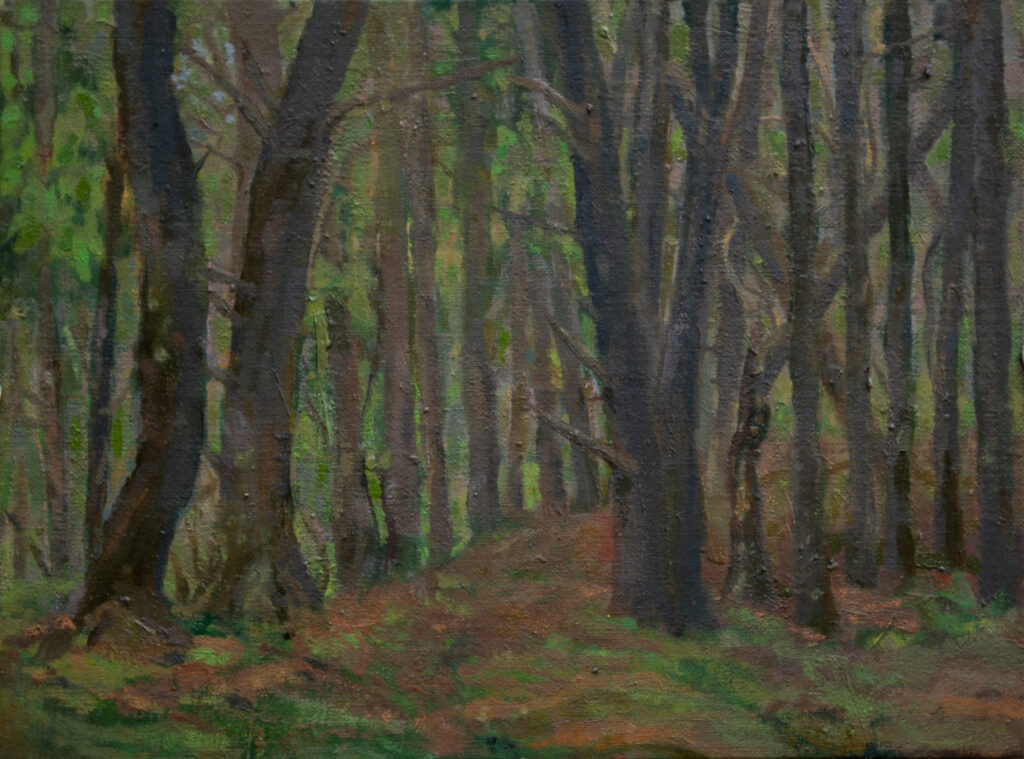
In the Pines, oil on canvas panel, 10″ x 9″

At first I painted—in the bathtub, maybe I was two or younger. My sister had not been born. My mother gave me a tray of finger paint. Delight swelled within me and I was suddenly non-verbal. I was also euphoric. As I splashed the paint on the tiled wall, images appeared, it was so sudden and natural. I couldn’t contain my exuberance and after enough time, thought by mother, she grabbed me under my arms and hoisted me out of the tub, onto my feet. To no avail, I tried to resist and resume my first delve into creativity but it was stopped—until my next bath.

I have never stopped loving paint and the action required to manipulate its potential. Though I often acquiesce to its stand alone beauty, yes, I am happy to submit myself in veneration with no action. Often, my palette provides visual awe, as does a walk among the trees and I realize the gift of vision is my greatest enabler. When I allow my eyes to wander, as a free spirit, the magnificence before me dazzles me into inspiration. I have found over the years, there is no way I can convey my love, awe and admiration for what lies before me in nature. But I have found submission to nature draws me closer and as I calm myself, my inspiration leads me with hope that I can express some aspect of the beauty of being alive.

I don’t understand any of this. It is not rational and I practice going to a place of the unknown and digging for the pleasure of digging and the prospect of what I might find. And even when nothing is revealed, the beauty of the dig is my reward. My gratitude is endless.

Kevin Freeman—I think this was taken around the time I was introduced to paint

Into the Woods—Painting

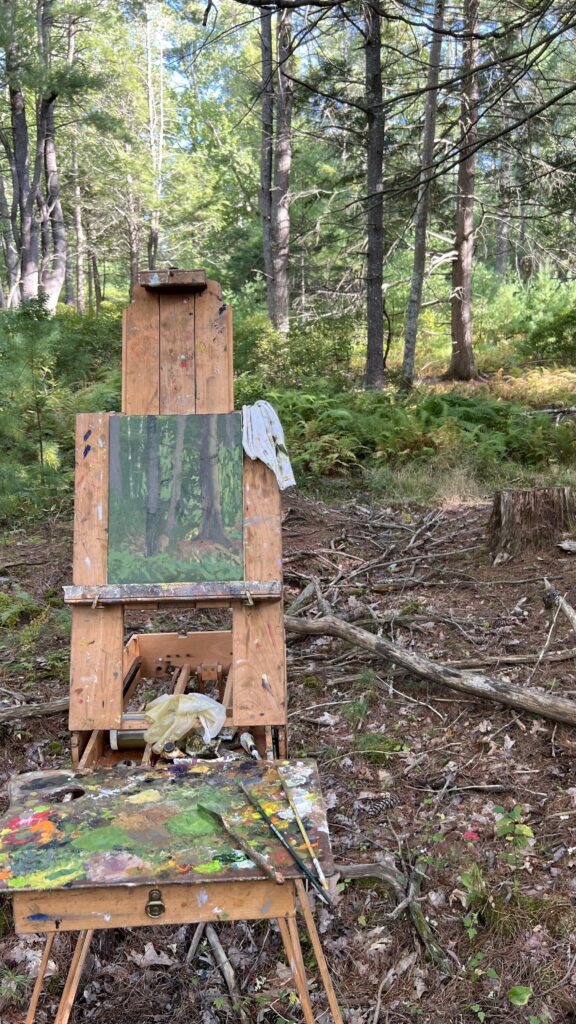
Plein Air painting in woods in Maine

My love for drawing in the woods was established during my first two years at art school. I loved drawing class and especially loved going outside to draw. I also loved drawing from the model. Actually, I love all drawing and still do. At art school, one of my fondest memories was drawing with black and white gauche. It was much like painting with the oil paint we were training with but much less laborious.

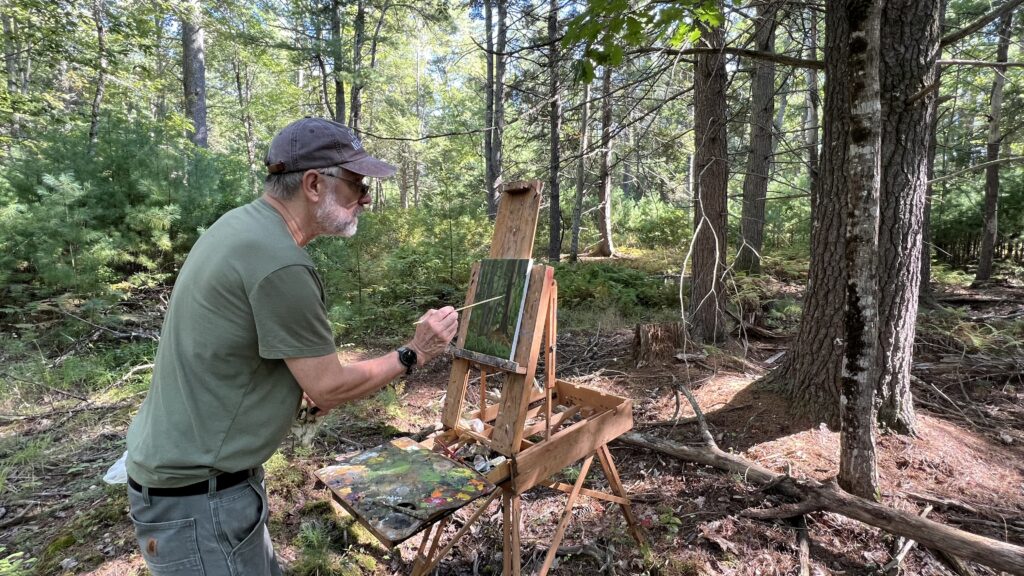
The creative process, for me, has a mind of its own. I don’t know where I will end up next and I don’t think it matters. One of my favorite things to do is make images on two dimensional surfaces, no matter what things may look like. As I have always drawn in the woods, I haven’t always painted in the woods. About 30 years ago, I bought a French easel. It was a remarkable investment at the time. Though recently, when full of paint and supplies it proves to be quite heavy on long jaunts through the woods. None-the-less, I am finding myself unable to resist afternoon plein air painting sessions in the woods. The light, this time of year, early fall, is impossible not to love. Combined with the beauty of the woods, in late afternoon and a pallet of paint I am helpless and find myself enthralled to be standing in the woods, among the majesty of nature with brush and panel.

Kevin Freeman applying paint to a canvas in Maine woodland

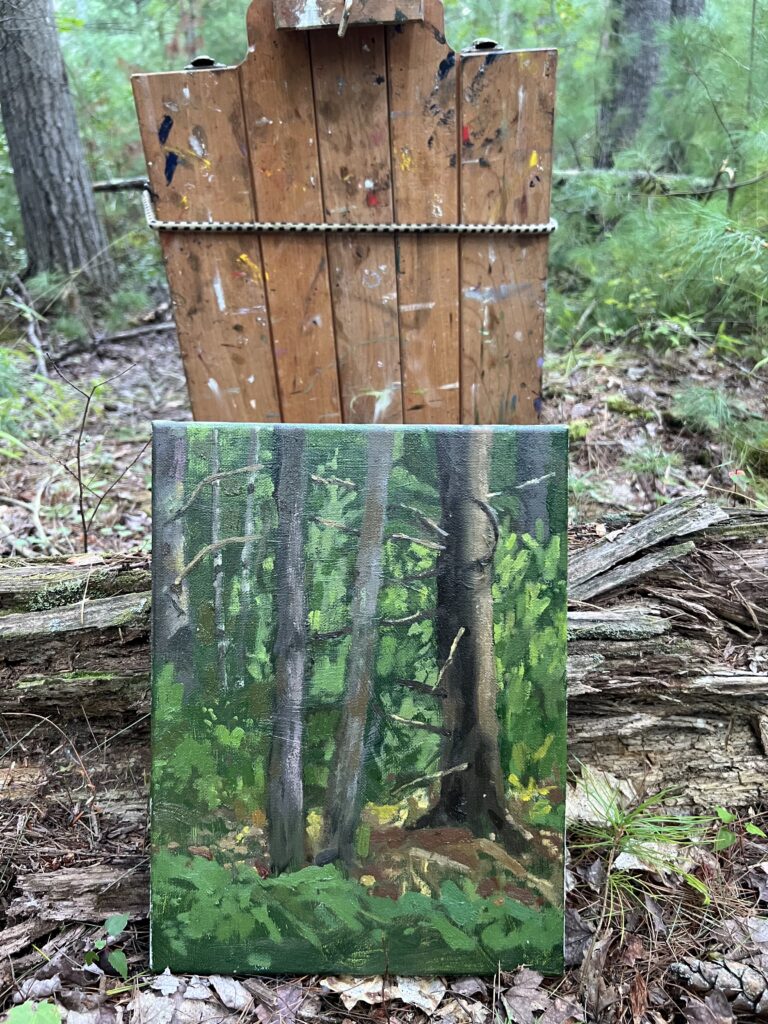
As I begin to compose the picture I really have no idea what will happen. I find it almost too challenging to think I can make a facsimile of what I am seeing in front of me. But, as I muster my nerve, I pursue what I could consider impossible and begin work. Three quarters of the time spent is laying down colors, making adjustments and feeling like I have taken on too much as I wonder if I have just wasted my time. Occasionally the answer is yes! Time wasted! What keeps bringing me back, however, is when something begins to take shape and I see a reflection of nature being created right before my eyes. Somehow through my emotions, through my body and through my hands the paint flows from the tip of the brush and I begin to feel excited and hopeful and in love with the process. Toward the conclusion of the painting. there is always a balancing act. The painting wants to appear fresh and vibrant and it is so easy to overwork, to suffocate the vitality of the colors. At this point it is incumbent on me to stop at exactly the right place with only intuition as my guide. I cannot trust my eyes because they go to my head before my heart. It is only later back in the studio, after a brief time of not looking at the painting I can reevaluate the it—look at it with fresh eyes. And likely make a few final adjustments.

Almost final painting but back to the studio for another look and a few likely touch ups.

Art of the Unknown

By far my favorite way to create images is to submerse myself into the unknown. This may sound easy, but to be in a state of willing and unchartered mindset requires practice and an ability to make small gains to such a state of mind. I am not entirely proficient at reaching a state of unknown but indulge myself in the idea. Especially when I am outside, in the landscape with a sketchpad. I especially enjoy choosing a drawing tool that seems too impossible to make a pretty picture with, rather, I select a tool that makes me have to work at expressing what I am observing, no matter the results.

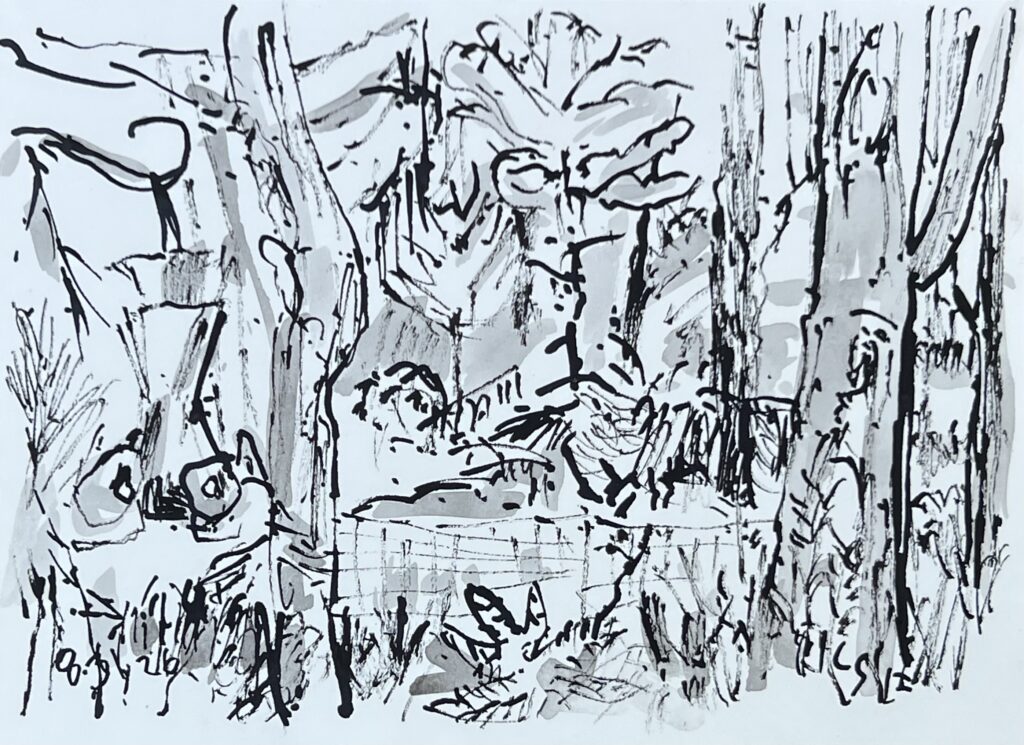
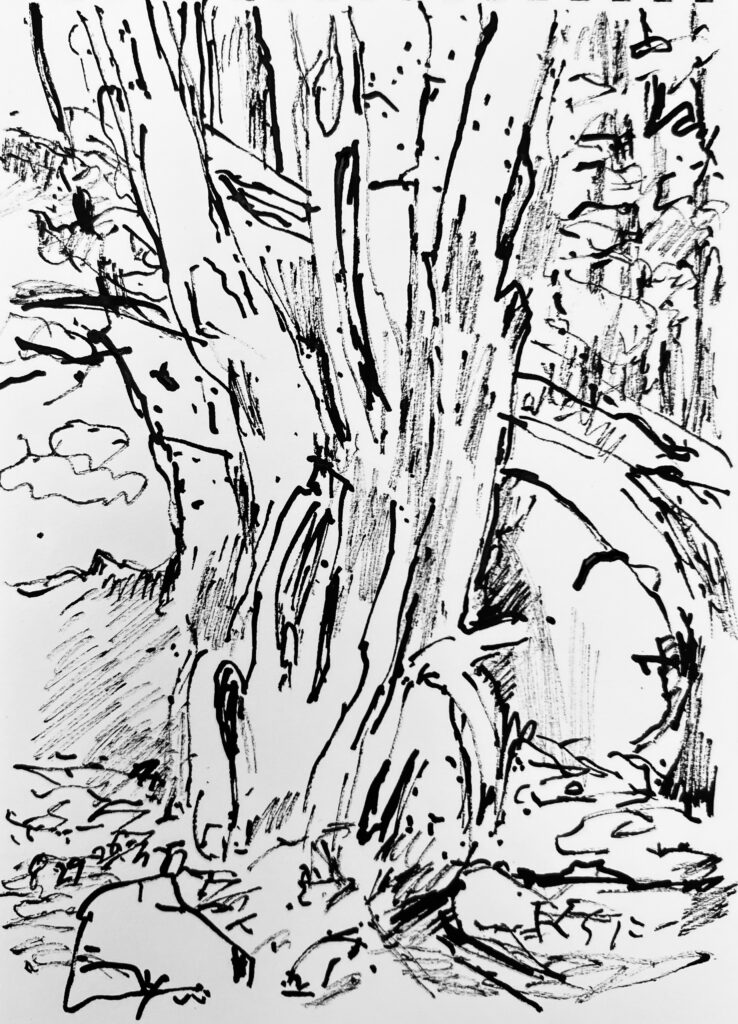
Toward the Garden, stick on paper, August 2026

The above drawing is a good example of drawing with a tool that feels impossible. My natural instinct it to create a drawing that is like a photograph. And sometimes I love very much to render an image that relies on my skills. Mostly, however, I prefer to have to invent the drawing and work to make it come together. At some point during the process, I usually become excited about the image that develops in front of me—especially when using a stick and India ink.

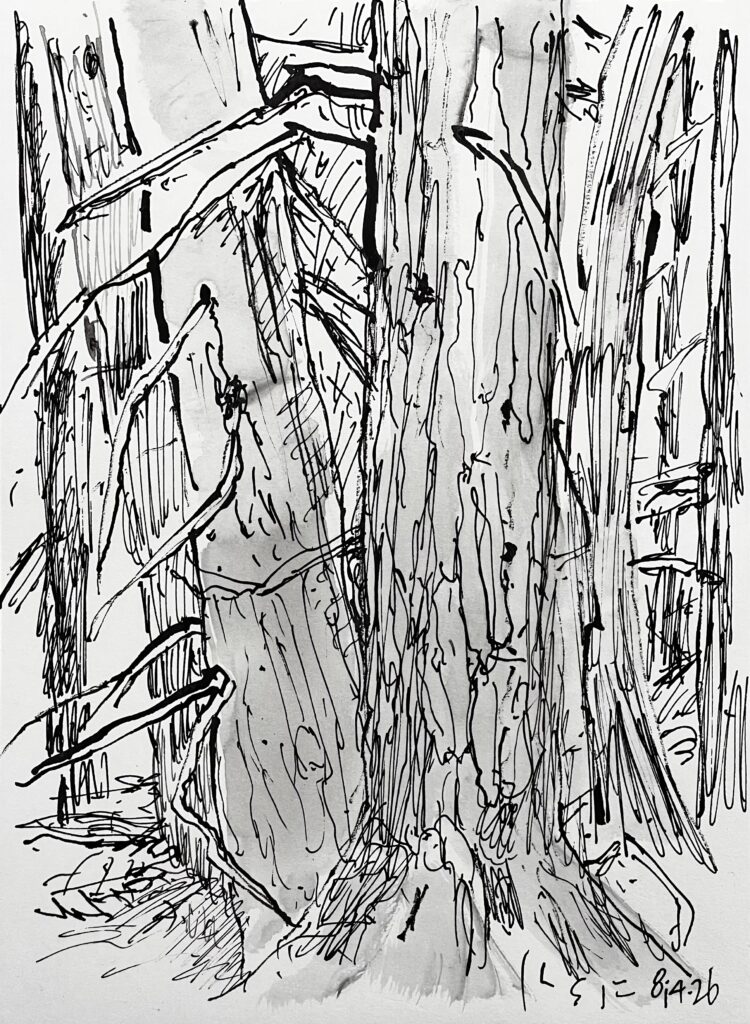
Black Birch, stick and ink, August 2026

When drawing in the woods, I find it difficult to comprehend the magnificent views that nature seems to throw at me. I realize that my ability to take it all in is a dream and that to not be overwhelmed, I need to focus on one view. To get started, I often think of looking through a view finder on a camera with about a 50mm lens. This helps me begin making marks on a blank sheet of paper and allows me to focus on what is reasonable for me to compose. I find drawing in the woods very much like fishing in a small stream. You never know what you are going to catch and some days you go home empty handed. But nonetheless, there is a beauty in the process and that is what keeps bringing me back.

The Tao

The tao that can be told 
is not the eternal Tao 
The name that can be named 
is not the eternal Name.

The Tao Te Ching by Lao Tzu

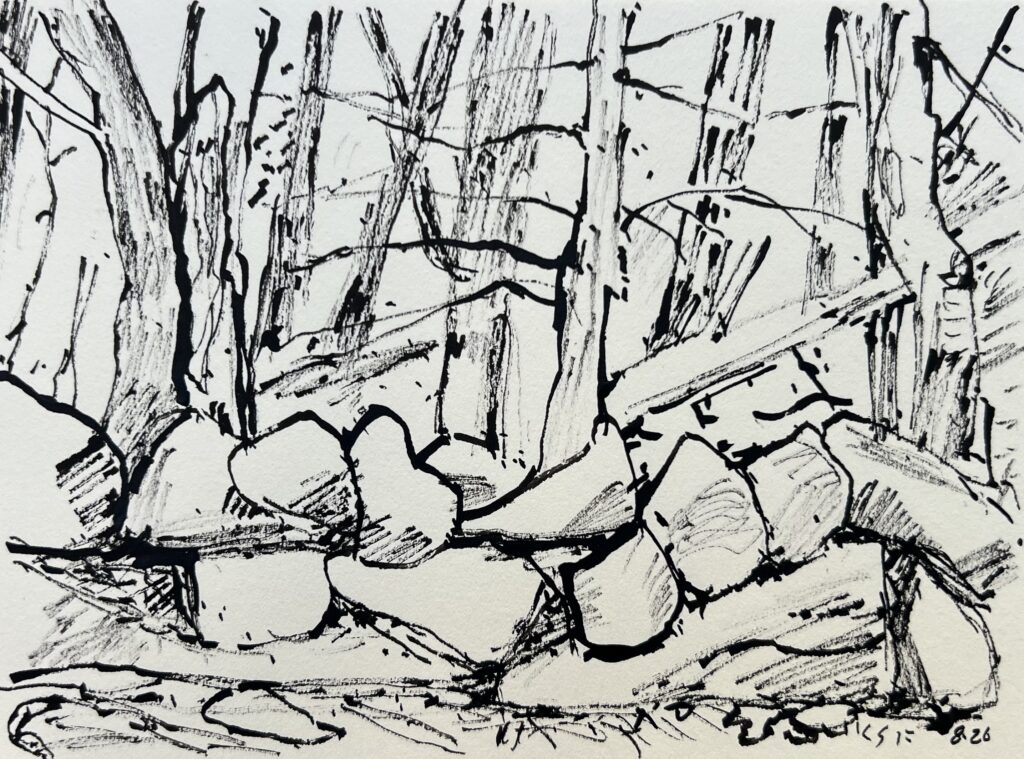
I have been an admirer of the Tao Te Ching since I discovered it in my early twenties. I have loved the seeming contradictory nature of it. As I practice drawing it has been a guiding influence on the way I think about the universe and my place in it. I don’t look too far beyond for inspiration but prefer to be close to the place I feel most grounded. Good fortune has brought me to where I live and love. I have been granted much space to explore the Maine woodland and familiarize myself with its ever evolving majesty.

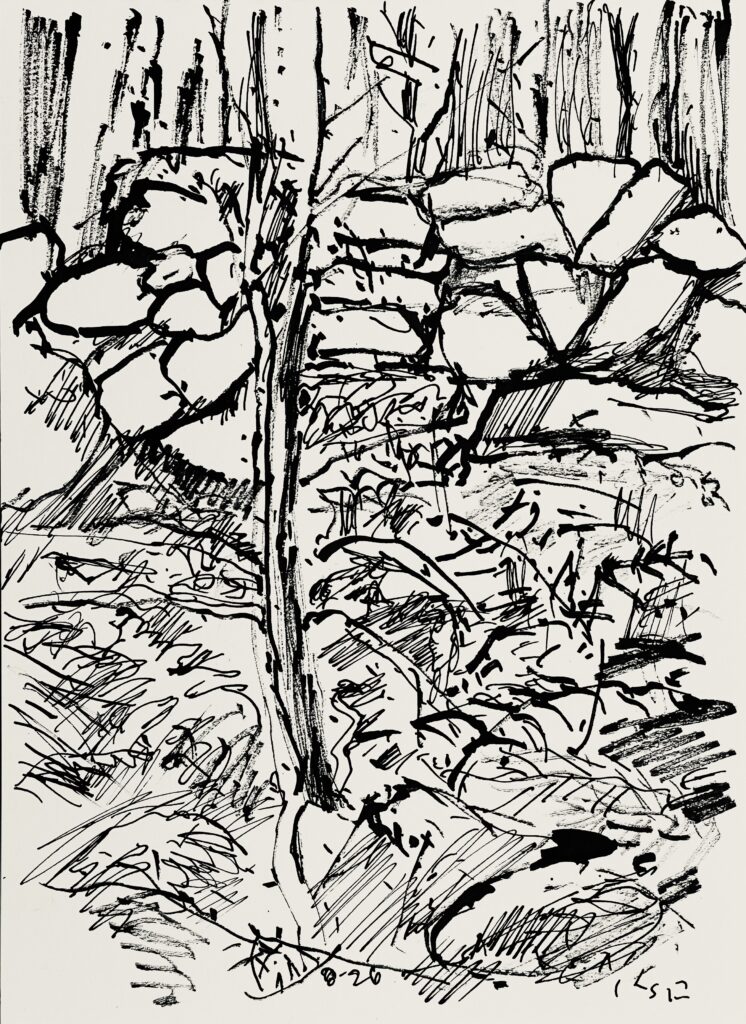
Occasionally, I think, Oh, maybe I should go further away to explore new vistas to incorporate into my artwork. But I am so compelled to stay close, to what may seem familiar but on second look becomes the miracle of mindfulness. I think the Tao has opened my mind to the possibilities of discovery as I apply ink to paper or paint to canvas. And also, words to pages, another of my great loves.

Woods Drawing with Stonewall, stick, pen and ink, on paper, 6″x8″

Josias River

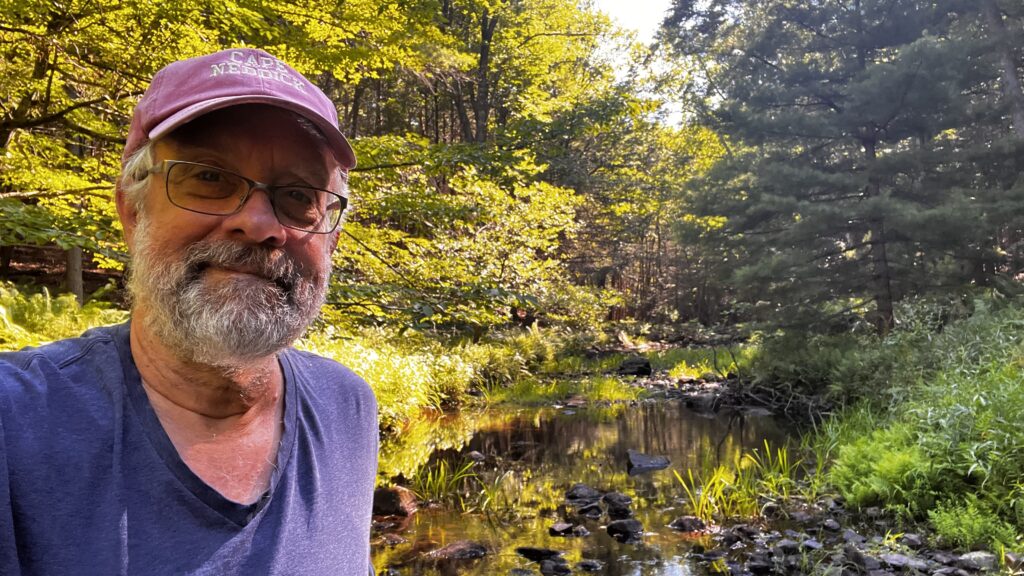
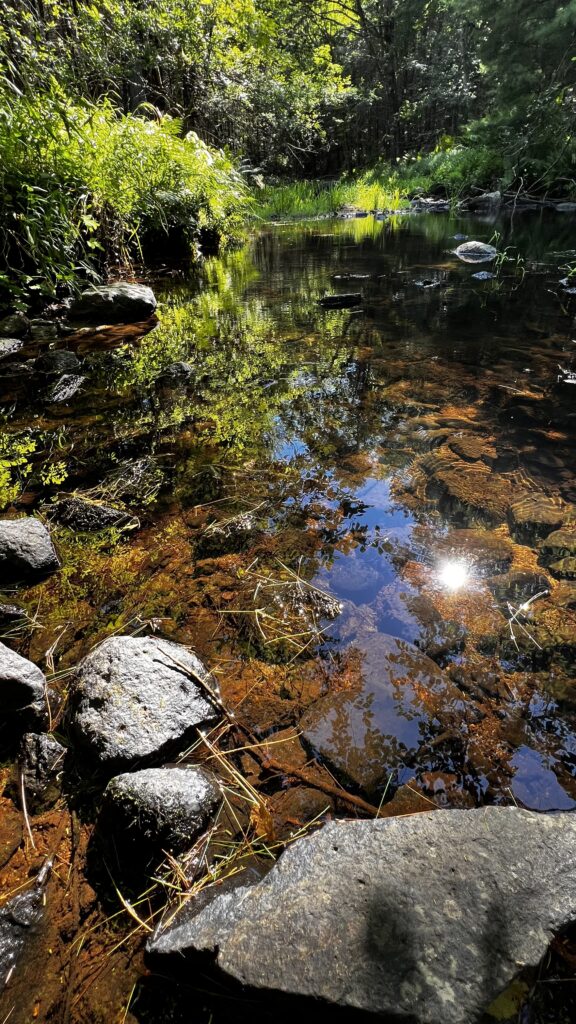
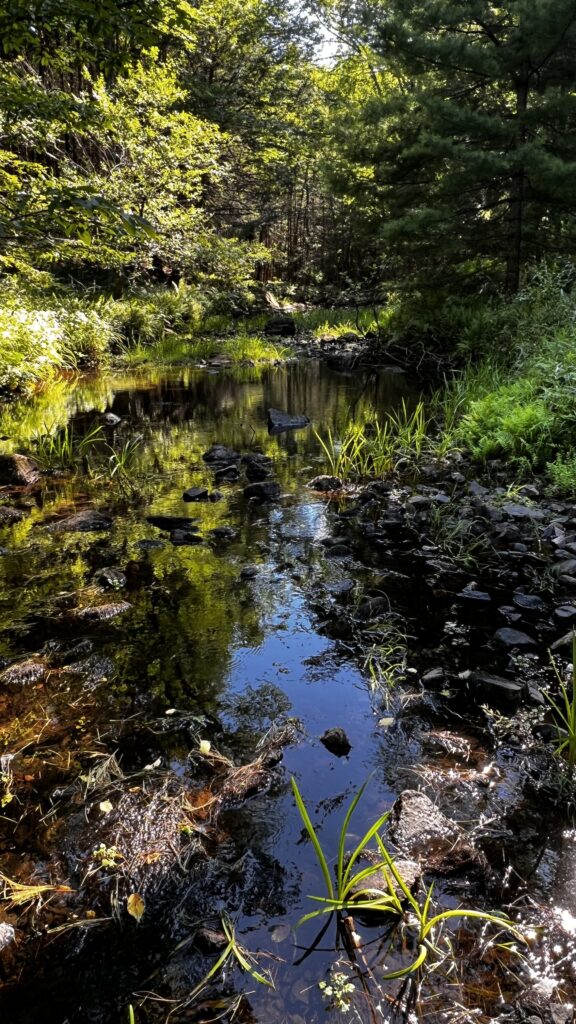
Yesterday afternoon, during a break from drawing, I walked down to the Josias River, that is in my backyard. The river flows straight to Ogunquit and into Perkins Cove and then the Atlantic Ocean. This time of year the river is characteristically low compared to the spring. I cannot quite walk across to the other side without getting my shoes wet. The best way to cross would be to take my shoes off and feel the cool water on my feet. At the deepest places it is only up to my knees.

Woods Drawing, Stick, Pen, Brush and Ink on Paper, 6″x8″

Here are a few photos that show the sparkling quality of light down there.

The river is such a magical display of nature. Always sharing a deep maternal aspect of something that I cannot easily express. Certainly photos can help by when all of the senses are converging it becomes all the more amazing.

Delighted by Summer

The garden is boasting of abundance and the art muses are dashing generosity here and there. The weather is a delight, including the bellowing thunder earlier, today. I have been able to get into my painting studio and do what I love most—dabble with oil paints. It requires a fan and open doors so I don’t become delirious with toxic fumes. Even so, I am grateful to try my hand at the possibility of creativity.

Stick and Ink Drawing
Stone Wall, Stick and Ink Drawing on Strathmore paper, 6″x8″

Yesterday, I was able to dash off the above drawing. There is an old stonewall not far from my home. I have always admired it and have loved to imagine my ancestors placing stones in a row and one on top of another. The oxen standing at attention, submitting the most demanding adjustments of the largest stones—all for me to admire and enjoy centuries later.