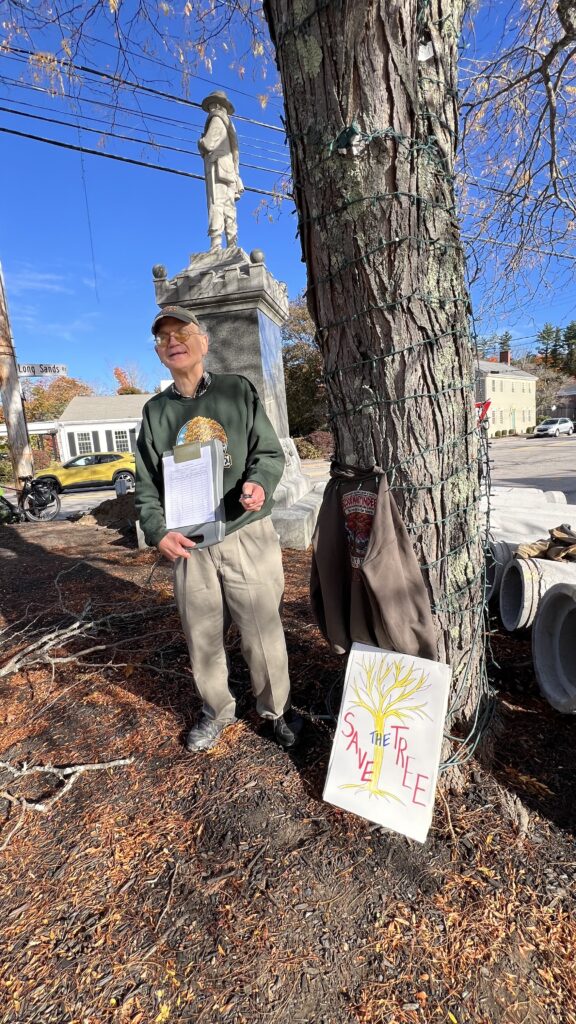
James Kences has created a citizen’s petition and submitted to the York Select Board. It seems very likely the honey locust will be cut this upcoming week, of November 1.
What do a honey locust and Town historian James Kences have in common? In terms of the Town’s historic timeline they both arrived quite recently. James began studying early York families while living in Massachusetts. He became so enamored by what he read, he got in is car and drove to the Village Burying Ground, and soon after became a resident of York. The honey locust was already an established resident when James arrived. Someone saw to it, to plant this tree in the center of town knowing that it would resist heat, drought, compacted soil and road salt. But there is more to the story. James has been protesting in the company of the honey locust for years. My first recollection is when I was on the Board of trustees at Old York and through the Board room window at 207 York Street, James was seen by the Board protesting the removal of the museum’s treasured archives from York to Kittery. There is no-one who has spent more time at the triangle protesting on behalf of common sense and for us all, as has James Kences.
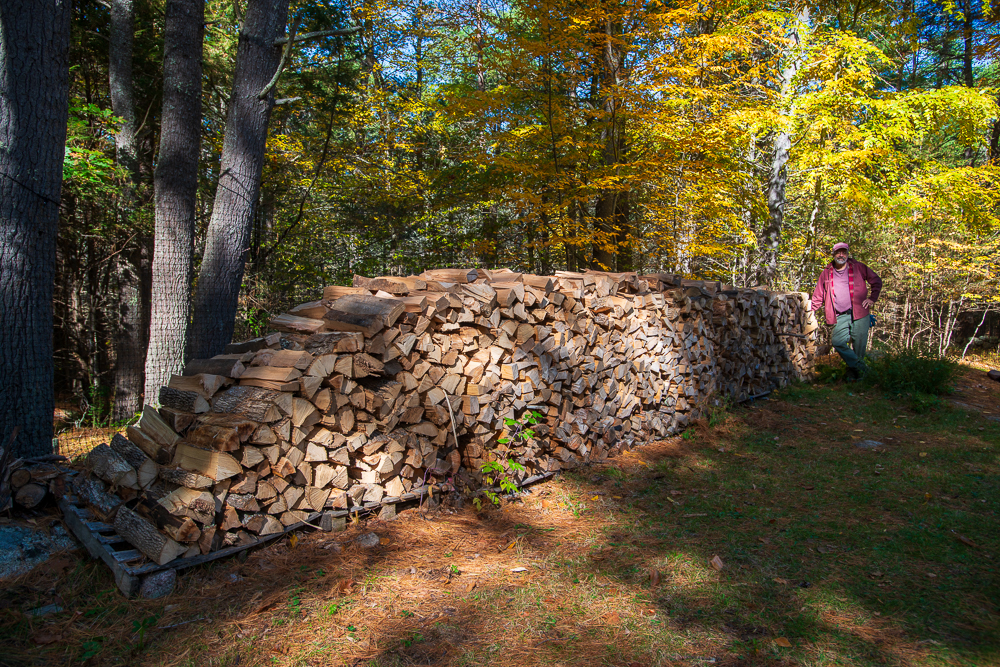
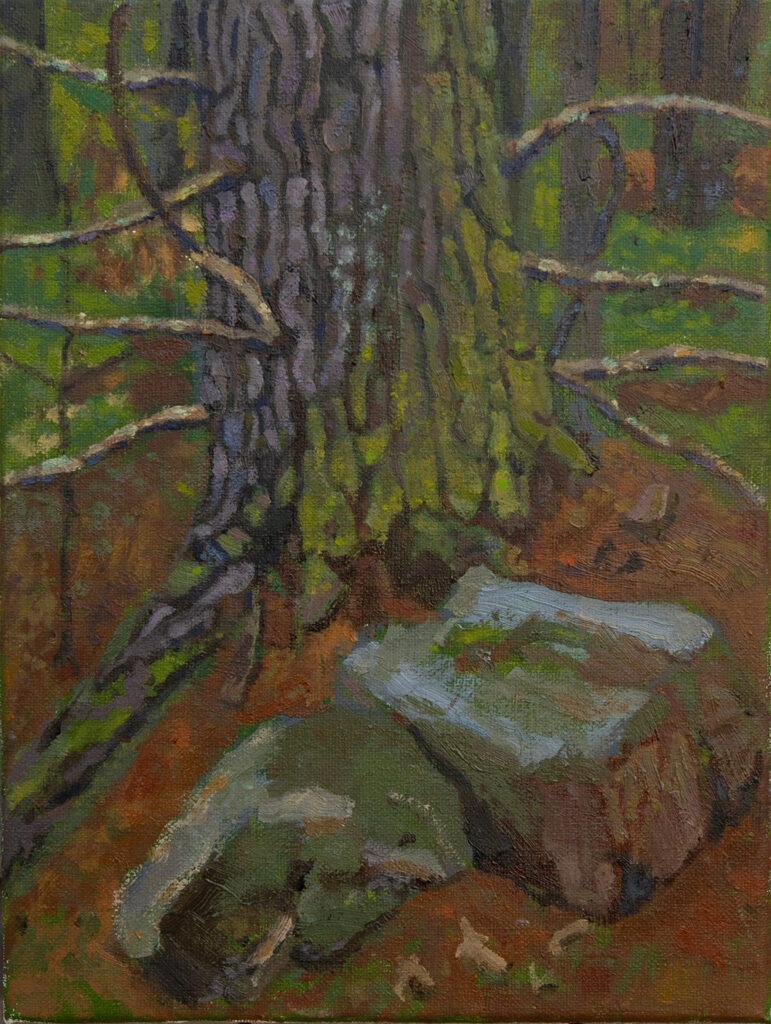
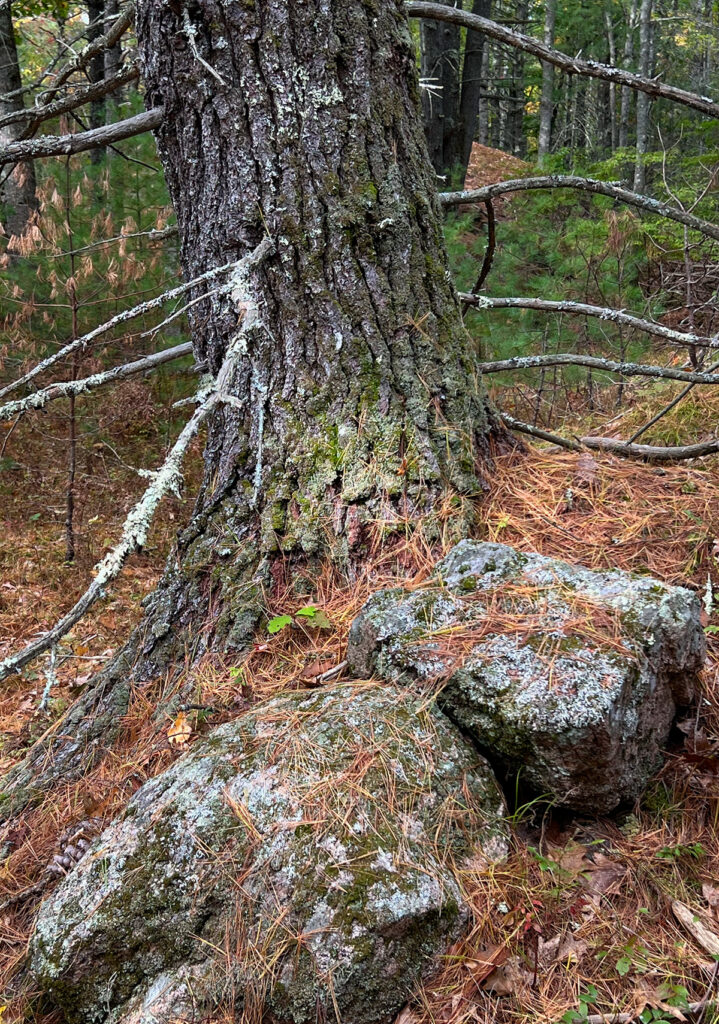
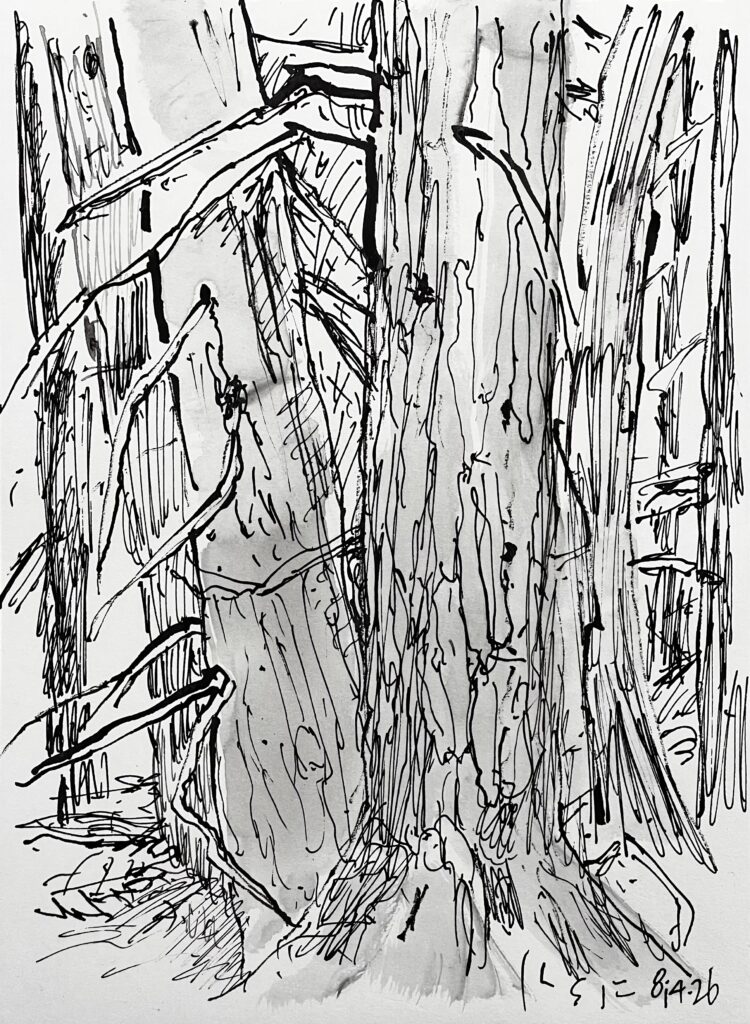
I am a tree hugger. When walking through the woods, I like to hug a tree or two. I love trees. They sustain my life. They are also so beautiful that I make paintings of them. How can I not? Yet, trees and I have a complicated history. I know that my colonial ancestors here in York, sold trees. They started with ship masts, firewood, and went to barrel staves, clapboards, lumber and any thing else that they could capitalize on. In fact, York residents cut so many trees that trees became a rarity in York and all of New England was affected by massive deforestation by European settlers. I believe that I somehow inherited a love for processing firewood from these Europeans and at the same time I don’t enjoy cutting trees. This is a dichotomy that I am dealing with. At a very early age, my dad took me into the woods where he taught me how to cut trees with a chain saw, use an axe and how to season firewood. In the woods, he recalled to me how he and his dad would go cutting wood with a team of horses in the winter. And how the horses would pull the wood out with a scoot sled. My dad cultivated some romantic notion of tree harvesting in me that he shared with his brothers, two were professional wood cutters. My aunt Evelyn, told me how my great grandfather, Albert Perkins, would take a team of oxen and a cart from Logging Road, up to the backside of the Mountain, and spend the night, sleeping under the cart. They would spend the next day cutting trees and filling their cart with firewood, driving it to the Cape Neddick River for export. Cutting wood connects me to my family and it also warms my soul, especially when sitting next to the wood stove on cold winter nights.
Although it may be in my DNA to cut trees, I try to make amends to each tree I cut by saying a prayer after felling—I have read that some Natives leave tobacco at each stump as a token of respect. Then I haul, cut, split and stack the wood. I very much enjoy the latter process and feel that the wood pile is security in the event of a hard winter, no doubt a mentality passed down through generations.
As I was explaining all this to James today, after I signed his petition, it occurred to me, that in his eyes, I could be perceived as a traitor. I confessed to James—someone intent on saving a tree, I am a tree cutter. I may have been minimizing his feelings of companionship for the honey locust. But I trusted my friendship with James and our shared interest in working out puzzling situations. I have been the beneficiary of James friendship for many years and I know he has a big heart. James explained to me his relationship with the honey locust—how it had accompanied him through severe weather, emotional rollercoasters and even the best of days during his numerous protests. The tree has been his companion and is now his champion. After our conversation I became introspective and realized I too had favorite trees. Ones that have accompanied me through most of my life and that I cherish. Many near my house, two still bear the marks of a treehouse. I realized that the trees I am most familiar with are the ones I love most. And like James with his tree, if mine were threatened, I would stand against any aggression toward them. As a friend of James, I find myself allied with him and his effort to save the honey locust.
I don’t know if all trees are equal. I feel that deep down, yes, all trees are equal. They are all created by the awesome force of nature and life. The idea that we may pick on one to be a companion may diminish all the others. But it isn’t difficult for me to empathize with James, especially as it is so simple not to cut a chosen tree.